Poverty is an Engineering Problem
How Kenya Can Build Systems That Turn Youth Potential into Economic Power

Bill Clinton Ooko
Economist-Engineer
Baraka Agritech Cooperative Initiative
LavernAI Digital Skills Infrastructure
1. Executive Summary
This policy brief argues a simple and uncomfortable truth that policymakers in Kenya and across East Africa have been reluctant to accept:
Poverty is not a cultural issue, an attitude issue, or a curse. Poverty is an engineering failure.
When a bridge collapses, we do not gather the survivors for motivational speeches. We do not tell them to believe harder in the bridge. We inspect the foundation, redesign the structure, and reinforce the beams. The problem is mechanical, and the solution is mechanical.
In Kenya today, the economic bridge collapses long before young people even begin their adult lives. They encounter an education system disconnected from the labour market. They join cooperatives without market intelligence or bargaining power. They farm land that could feed nations but return home with pockets emptied by middlemen. They work twelve-hour days in the informal sector and still cannot afford rent.
This is not bad luck. This is not God's plan. This is the predictable result of poorly designed economic systems.
This brief proposes a structural solution grounded in two pillars:
Baraka Agritech
A model of agricultural production where youth are organized into cooperative economic units, not isolated individuals. It treats farming as engineering: controlled inputs, reliable processes, predictable outputs, market access, and reinvestment cycles.
LavernAI
A digital learning and productivity infrastructure that trains people for the economy they actually live in, not the one imagined in outdated syllabi. It links skills directly to industries, not certificates to filing cabinets.
Policy must stop asking the poor to change their mindset. Policy must fix the machinery.
2. Context: The Real Condition of Kenyan Youth
Most interventions in Kenya treat poverty as a humanitarian condition. The logic is simple: find the poor, give them something, move on. Give relief food. Give bursaries. Give speeches at county functions. Give certificates after three-day seminars on entrepreneurship.
But relief is an anaesthetic. It numbs the pain, but it does not heal the wound.
Kenya's youth are not sitting idle. Walk through any market in Kisumu, any jua kali shed in Nairobi, any village in Bungoma. You will find young people working. They farm. They repair motorcycles. They code. They trade. They cook. They hustle from dawn until the last matatu leaves the stage.
They are not lazy. They are trapped in low-productivity systems.
A farmer working 12 hours a day earns less than a broker who makes 20 phone calls. That gap is not a reflection of effort. It is a reflection of system design.

Bill Clinton Ooko engaging with community members on agricultural and economic development in Kenya.
The Structural Reality
Consider the arithmetic of poverty in rural Kenya:
- A young farmer grows maize on half an acre. She buys inputs at retail prices because she has no bulk purchasing power.
- She cannot irrigate because water infrastructure does not reach her plot.
- After harvest, she has no storage. The maize must sell immediately or rot.
- The buyer at the farmgate knows this. He offers half the Nairobi market price. She accepts because she has no alternative.
- By the time she pays back her informal loan, she has made a loss on her own labour.
This is not a failure of effort. This is a failure of infrastructure, logistics, information, and market structure. It is an engineering failure.
Baraka Agritech recognizes this reality. Youth are strongest when organized around production units, not left to individual survival. They become bankable, insurable, and investable when aggregated. Markets respond to groups with predictable output, not scattered individuals with uncertain yields.
3. Poverty as an Engineering Problem
Engineering operates on three principles:
- Inputs — the raw materials, capital, data, and infrastructure that enter a system
- Processes — the methods, organization, and efficiency with which inputs are transformed
- Outputs — the products, incomes, and value generated by the system
Poverty is what happens when:
- Inputs lack infrastructure, data, credit, and capital access
- Processes are inefficient, isolated, non-scalable, and disconnected from markets
- Outputs are undervalued by markets with asymmetric information and exploitative intermediaries
You can pour money into broken structures forever. Nothing changes. The water leaks out through the same cracks.
A Comparative Example
| Factor | Isolated Farmer | Baraka Agritech Cooperative |
|---|---|---|
| Input Purchasing | Retail prices, no negotiating power | Bulk purchasing, 20-40% cost reduction |
| Water Access | Rain-dependent, high risk | Shared irrigation infrastructure |
| Post-Harvest | No storage, forced immediate sale | Aggregation centres, cold storage |
| Market Access | Farmgate buyers, price exploitation | Contract buyers, negotiated prices |
| Income Stability | Volatile, season-dependent | Predictable, diversified risk |
| Credit Access | Informal loans, predatory rates | Cooperative credit, lower default |
The same land. The same weather. The same young farmer. Different engineering.
The isolated farmer is not lazier than the cooperative member. She is not less intelligent or less hardworking. She is simply operating in a system designed to extract value from her labour rather than multiply it.
4. Policy Direction
4.1 Recognize That Poverty is Material, Not Moral
For decades, Kenyan policy discourse has been contaminated by a dangerous assumption: that the poor are poor because of some deficiency in their character, culture, or motivation. This assumption manifests in policy interventions that emphasize mindset change, entrepreneurship seminars, and motivational speakers rather than infrastructure, market access, and capital.
Poverty does not respond to sermons, conferences, or motivational speakers. It responds to:
- Infrastructure — roads, water, electricity, storage facilities, digital connectivity
- Market access — aggregation points, buyer contracts, price information systems
- Efficient logistics — transport networks, cold chains, last-mile delivery
- Skill conversion — training that leads to employment, not certificates that lead to filing cabinets
- Capital mobility — credit that reaches the productive, not just the connected
- Data — weather information, market prices, demand forecasting, yield optimization
This is why Baraka Agritech and LavernAI matter. They are not motivational programs. They are not awareness campaigns. They are engineering deployments. They treat the economy as a system that can be designed, optimized, and scaled.
4.2 Shift from Relief to Production
The development industry in Kenya has created a dependency loop. Donors fund projects. Projects create beneficiaries. Beneficiaries receive relief. Relief creates dependence. Dependence justifies more funding.
This model has failed. After sixty years of independence and billions of shillings in development assistance, Kenya still has higher poverty rates than some countries that received a fraction of that aid. The problem is not the quantity of intervention. It is the type.
Policy must shift from relief to production. From handouts to systems. From individual beneficiaries to economic units. From certificates to capabilities. From seminars to infrastructure.
5. System Design Interventions
5.1 Baraka Agritech: Agricultural Engineering, Not Hope
Baraka Agritech organizes youth into production cohorts. These are not loose associations or welfare groups. They are economic units with shared infrastructure, coordinated production, and collective market power.

Bill Clinton Ooko on the ground in Kabondo, where Baraka Agritech coordinates sweet potato production
Core Components of Baraka Sweet Potato Growers Cooperative
- Shared land-use models — Pooled plots for economies of scale, crop rotation planning, and mechanization access across seven agricultural zones in Kabondo Constituency
- Aggregated input purchasing — Bulk buying of fertilizer, seeds, and equipment at wholesale prices, reducing costs by 20-40%
- Controlled irrigation — Shared water infrastructure eliminating dependence on unpredictable rainfall
- Zonal aggregation centres — Seven designated collection points with digital weighing scales, QR-coded packaging, and real-time inventory tracking
- Post-harvest storage and processing — Central godown facilities plus value addition units for flour, chips, starch, and animal feed production
- Unified market access — Contract negotiation with buyers at cooperative level, eliminating exploitative middlemen and ensuring stable prices
- Export infrastructure — Container 58 at Kisumu International Airport positions the cooperative for direct international market access with full phytosanitary certification
- Digital traceability — GPS-tagged farms, QR-coded produce batches, and blockchain-compatible ledgers ensuring full supply chain transparency from seed to shelf
Governance That Works
Baraka Agritech operates under a five-tier governance structure: General Assembly, Board of Directors, Founders Board, Zonal Council, and Advisory Committees. This is not bureaucracy for its own sake. It is accountability architecture.
- Executive Committee — Three elected officials (Chairperson, Secretary, Treasurer) providing strategic leadership with three-year terms
- Zonal Council — Seven elected representatives from each agricultural zone, ensuring grassroots voice in decision-making
- Advisory Committees — Finance and Audit, Technology and Innovation, Legal and Compliance, Trade and Export
- Gender and youth representation — No single gender holds more than two-thirds representation in any elective organ
By doing this, Baraka Agritech dismantles the most vicious poverty mechanism in East African agriculture: price exploitation by intermediaries.
Under proper engineering, farmers do not hope for prices. Prices are negotiated at scale. Risk is distributed across the cooperative. Revenue becomes predictable. Reinvestment becomes possible.
Baraka Agritech is not a charity. It is a production architecture.
5.2 LavernAI: Knowledge as Economic Infrastructure
LavernAI does not exist to educate people in the abstract sense. It exists to convert skills into income and opportunity. The distinction matters.
Kenya's education system produces graduates who cannot find work. Not because they lack degrees, but because those degrees do not map to economic demand. The curriculum was designed for an economy that no longer exists. The skills taught are not the skills employers need.
LavernAI Platform Architecture
LavernAI operates with a sophisticated role-based access control system supporting five distinct user types:
- Pro Users — Students who have purchased a subscription ($4/month) with full platform access
- Crowdfunding Applicants — Low-income students who gain access through a comprehensive 10-criterion vetting process including academic performance, teacher recommendations, peer endorsements, and AI assessment
- Parents and Guardians — Monitoring accounts with specific dashboards, activity tracking, and notification systems
- Teachers and School Administrators — Accounts with class management capabilities, student endorsement tools, and analytics dashboards
- Platform Administrators — Backend system managers with moderation and certification authority
Authentication and Accountability
The platform implements biometric verification using facial recognition and voice analysis. This is not surveillance for its own sake. It is fraud prevention. When crowdfunded seats are limited and valuable, the system must ensure they go to genuine students, not opportunists.
- 30-point facial recognition — Antispoofing measures including eye-tracking and randomized expressions
- Voice recognition — Initial voice sample collection with periodic re-verification during sessions
- School verification — Three-tiered process including automated database matching, teacher cross-verification, and school administrator confirmation
Learning Modes
The platform adapts to how students actually learn, not how curricula assume they should learn:
- Visual Learning Path — High-definition diagrams, video tutorials, interactive simulations, mind mapping tools
- Kinesthetic Learning Path — Interactive exercises, lab simulations, gesture-based interactions, DIY project instructions
- Audio Learning Path — Narrated content, text-to-speech with natural voice, podcast-style lessons, verbal quiz options
- Adaptive Mode — Learning style detection algorithm with performance-based adjustment and continuous optimization based on results
Strict Mode and Attention Tracking
LavernAI includes real-time attention monitoring for focused learning sessions. This is not about punishment. It is about ensuring that sponsored students are genuinely engaging, and that learning time translates to learning outcomes.
- Eye-tracking calibration and gaze direction analysis
- Screen focus heatmapping and distraction detection
- Progressive alert system: subtle visual reminders, audio cues, temporary content pausing
- Accommodation settings for ADHD and attention disorders
LavernAI is not school. It is productivity infrastructure.
6. Policy Recommendations
A. For County Governments
County governments control the infrastructure that determines whether agriculture succeeds or fails. Water, roads, aggregation facilities, market access points — these are county responsibilities.
- Treat farmer and youth groups as economic machines, not charity cases. Invest in the infrastructure that makes them productive: water systems, storage facilities, aggregation points, and digital connectivity.
- Fund post-harvest infrastructure first. A farmer who cannot store produce has no bargaining power. Storage is not a luxury; it is the foundation of fair pricing.
- Implement digital traceability systems. Know what is being produced, where, by whom, and at what quality. This data enables market matching, quality certification, and export compliance.
- Stop funding ceremonies and speeches. Every shilling spent on launch events, conferences, and awareness campaigns is a shilling not spent on infrastructure that creates income.
B. For National Government
National policy sets the framework within which counties operate. It determines whether the education system produces employable graduates or certified unemployables.
- Make skills functional. Replace syllabus coverage metrics with competency outcomes. A TVET institution should be measured by employment rates, not examination scores.
- Reward institutions based on economic outcomes. Tie funding to graduate employment, income levels, and employer satisfaction — not enrollment numbers or pass rates.
- Create cooperative-friendly regulatory frameworks. Simplify registration, reduce compliance burdens, and enable cooperatives to access formal markets without bureaucratic obstruction.
- Invest in agricultural data infrastructure. Weather stations, soil analysis, market information systems, and yield forecasting should be public goods available to all farmers.
C. For the Private Sector
Employers complain about skill gaps while simultaneously rejecting candidates based on credentials that do not measure capability.
- Recruit capability, not papers. Work with platforms like LavernAI to define what skills actually matter for specific roles, then verify those skills directly.
- Invest in supplier development. Large buyers can transform agricultural value chains by contracting with cooperatives, providing technical assistance, and guaranteeing offtake.
- Share data with the ecosystem. Market demand information should flow to producers, not be hoarded as competitive advantage by traders.
D. For Development Partners
Donor funding has created a development industry that often prioritizes visibility over impact, outputs over outcomes, and activities over results.
- Stop funding awareness seminars. Farmers know they are poor. They do not need sensitization workshops. They need infrastructure and market access.
- Fund production nodes. Invest in aggregation centres, storage facilities, irrigation systems, and digital platforms that create lasting productive capacity.
- Measure income, not activities. A successful project is one where beneficiary incomes increased and remained higher. Everything else is administrative.
- Support cooperative development. Individual beneficiary models do not scale. Cooperative models create self-sustaining economic units that outlast project cycles.
7. Metrics That Matter
You cannot fight poverty with vibes. You cannot measure success by how many workshops were held or how many beneficiaries were registered. Poverty reduction is measured by economic outcomes, not administrative outputs.
Production Metrics
Unit cost per ton of produce
Lower costs mean higher margins for farmers. This measures input efficiency.
Post-harvest loss percentage
Losses before sale are income destroyed. Storage and logistics reduce this.
Price realization vs. market price
What percentage of the final market price reaches the farmer? Aggregation increases this.
Income variance per season
Stable income enables planning and investment. High variance traps farmers in survival mode.
Skills and Employment Metrics
Skill-to-employment conversion time
How quickly does completing a skill module lead to income? Shorter is better.
Labour productivity
Output per hour of work. This is the fundamental measure of economic efficiency.
Youth-to-market pipeline conversion
Percentage of trained youth who achieve sustained employment or income.
Employer satisfaction scores
Do employers rate trained workers as competent? This validates the training.
Financial Metrics
Loan default rate under cooperative aggregation
Cooperatives should reduce default through shared risk and stable income.
Credit access rate
What percentage of cooperative members can access formal credit?
If these metrics improve, poverty is declining. If they remain the same, you are running public relations, not policy.
8. Risks and Mitigations
No system is without risk. Acknowledging risks and designing mitigations is part of engineering, not a reason to abandon the approach.
Elite Capture of Cooperatives
Risk: Politically connected individuals take over cooperative leadership and redirect benefits to themselves and their networks.
Mitigation: Member-owned governance structures with term limits, transparent financial reporting, digital records accessible to all members, and rotating leadership positions. External audits tied to continued access to markets and credit.
Digital Exclusion
Risk: Digital platforms exclude those without smartphones, internet access, or digital literacy.
Mitigation: Offline-first design, low-bandwidth functionality, USSD alternatives, and community access points with trained facilitators. Digital should enhance, not replace, human networks.
Curriculum Rigidity
Risk: Training content becomes outdated as industries evolve, producing graduates with obsolete skills.
Mitigation: Industry-driven content development with continuous employer feedback loops. Modular curriculum that can be updated without overhauling entire programs. Direct employer input into skill definitions.
Capital Shocks
Risk: Economic downturns, natural disasters, or market collapses destabilize cooperative finances.
Mitigation: Cooperative credit buffers, crop insurance, diversified production portfolios, and access to emergency credit facilities. Building reserves during good seasons for deployment during shocks.
Political Interference
Risk: Politicians attempt to control cooperatives for patronage purposes, distributing benefits to supporters rather than productive members.
Mitigation: Legal independence of cooperatives, transparent membership criteria, performance-based benefit distribution, and multiple funding sources to reduce dependence on government channels.
Investment and Strategic Partnership Interest
Key angel investors through Qubit Capital have reached out regarding Baraka Agritech and LavernAI.
This signals growing international investor confidence in engineering-based approaches to African development challenges, particularly those that combine agricultural transformation with digital infrastructure.
Why Investors Are Paying Attention
The interest from Qubit Capital is not accidental. It reflects a broader shift in how serious investors evaluate African market opportunities. They are tired of funding awareness campaigns and capacity building workshops that produce reports but not results.
What Baraka Agritech and LavernAI offer is different: measurable infrastructure with clear revenue models, scalable architecture, and genuine unit economics. This is not charity dressed as investment. It is productive capital seeking productive deployment.
Baraka Agritech Investment Thesis
- Cooperative structure with corporate governance — Member-owned but professionally managed, with transparent financial systems and digital traceability
- Export-ready infrastructure — Container 58 at Kisumu International Airport positions the cooperative for direct international market access
- Value addition capacity — Processing facilities for flour, chips, starch, and animal feed multiply revenue per ton of raw produce
- Digital integration — GPS-tagged farms, QR-coded produce, blockchain traceability, and real-time market intelligence
- Scalable across regions — The Kabondo model can be replicated in other sweet potato belts across East Africa
LavernAI Investment Thesis
- Dual revenue model — Pro subscriptions at $4/month alongside crowdfunded access for verified low-income students
- Biometric authentication — Fraud prevention through facial recognition and voice verification ensures genuine student engagement
- Employer pipeline integration — Skills training directly connected to job opportunities, measuring success by employment outcomes
- Parent and teacher dashboards — Multi-stakeholder accountability built into the platform architecture
- Adaptive learning modes — Visual, kinesthetic, audio, and adaptive pathways that personalize instruction at scale
What This Means for Policy
When private capital begins flowing toward agricultural cooperatives and digital education platforms in Kenya, it signals something important: the market has identified investable solutions that government policy has failed to create or support adequately.
Policy should respond by creating enabling environments rather than competing programs. Tax incentives for agritech cooperatives. Regulatory clarity for edtech platforms. Public-private partnerships that leverage investor capital rather than duplicating it.
The question for government is simple: Will you build on what works, or will you continue funding what sounds good? Investors have made their choice. The data will show who was right.
9. Conclusion
Poverty is not a psychological condition. It is not a spiritual condition. It is not a reflection of character, culture, or effort. Poverty is a structural, economic, engineered phenomenon.
Engineers do not give motivational speeches to broken machinery. They do not run awareness campaigns about the importance of bridges not collapsing. They redesign the structure. They reinforce the foundation. They fix the system.
Kenya has spent decades treating poverty as a humanitarian emergency requiring endless relief. It has not worked. The poverty rate remains stubbornly high. Youth unemployment is a crisis. Agricultural productivity lags behind global standards. The informal sector absorbs labour without creating prosperity.
It is time for a different approach.
Baraka Agritech organizes production. It takes scattered, vulnerable farmers and aggregates them into economic units with purchasing power, storage capacity, and market access. It treats agriculture as engineering: controlled inputs, efficient processes, predictable outputs.
LavernAI organizes knowledge. It takes theoretical education and converts it into demonstrable capability. It connects skills to industries, learners to employers, and potential to income.
Together, they turn potential into output.
That is how you end poverty.
Not with speeches. Not with seminars. Not with certificates or workshops or awareness campaigns. You end poverty by building systems that work. You end poverty by treating the economy as a machine that can be designed to include everyone.
The blueprint exists. The technology exists. The young people exist. What remains is political will.
About the Author

Bill Clinton Ooko
Bill Clinton Ooko is a Kenyan economist-engineer whose work sits at the intersection of agricultural systems, digital infrastructure, and youth economic empowerment. He is the Founder and CTO of HowStuff and Learn App, the parent platform for LavernAI. He also serves as coordinator of the Baraka Sweet Potato Growers Cooperative Society Limited in Kabondo Constituency, Homa Bay County.
Ooko's approach to development is grounded in a fundamental conviction: that poverty is a design failure, not a moral one, and that the same rigour applied to building bridges and software can be applied to building economic systems that actually include young Africans. He has designed cooperative bylaws, digital platform architectures, and policy frameworks that treat agricultural transformation and education reform as engineering problems with engineering solutions.
Through Baraka Agritech, Ooko works with rural youth to transform scattered smallholder farming into organized production systems with real market power. The cooperative structure includes seven agricultural zones, digital traceability systems, value addition processing, and direct export channels through Kisumu International Airport.
LavernAI, his digital skills platform, operates on a dual model: paid subscriptions for those who can afford them, and crowdfunded access for verified low-income students who pass a rigorous 10-criterion vetting process. The platform includes biometric authentication, adaptive learning modes, and employer pipeline integration.
His policy work focuses on practical interventions rather than theoretical frameworks. He has advocated for shifting development resources from awareness campaigns and seminars toward infrastructure, market access, and productive capacity. His writing argues for measuring success by income and employment outcomes, not by activities completed or beneficiaries registered.
Affiliations
- Founder and CTO, HowStuff and Learn App (HSL)
- Founder, LavernAI Digital Skills Infrastructure
- Coordinator, Baraka Sweet Potato Growers Cooperative Society Limited
- Software Engineer, HSL Platform
Current Investment Interest
Key angel investors through Qubit Capital have expressed interest in both Baraka Agritech and LavernAI, recognizing the scalable infrastructure and clear unit economics of engineering-based approaches to African development challenges.
On the Ground
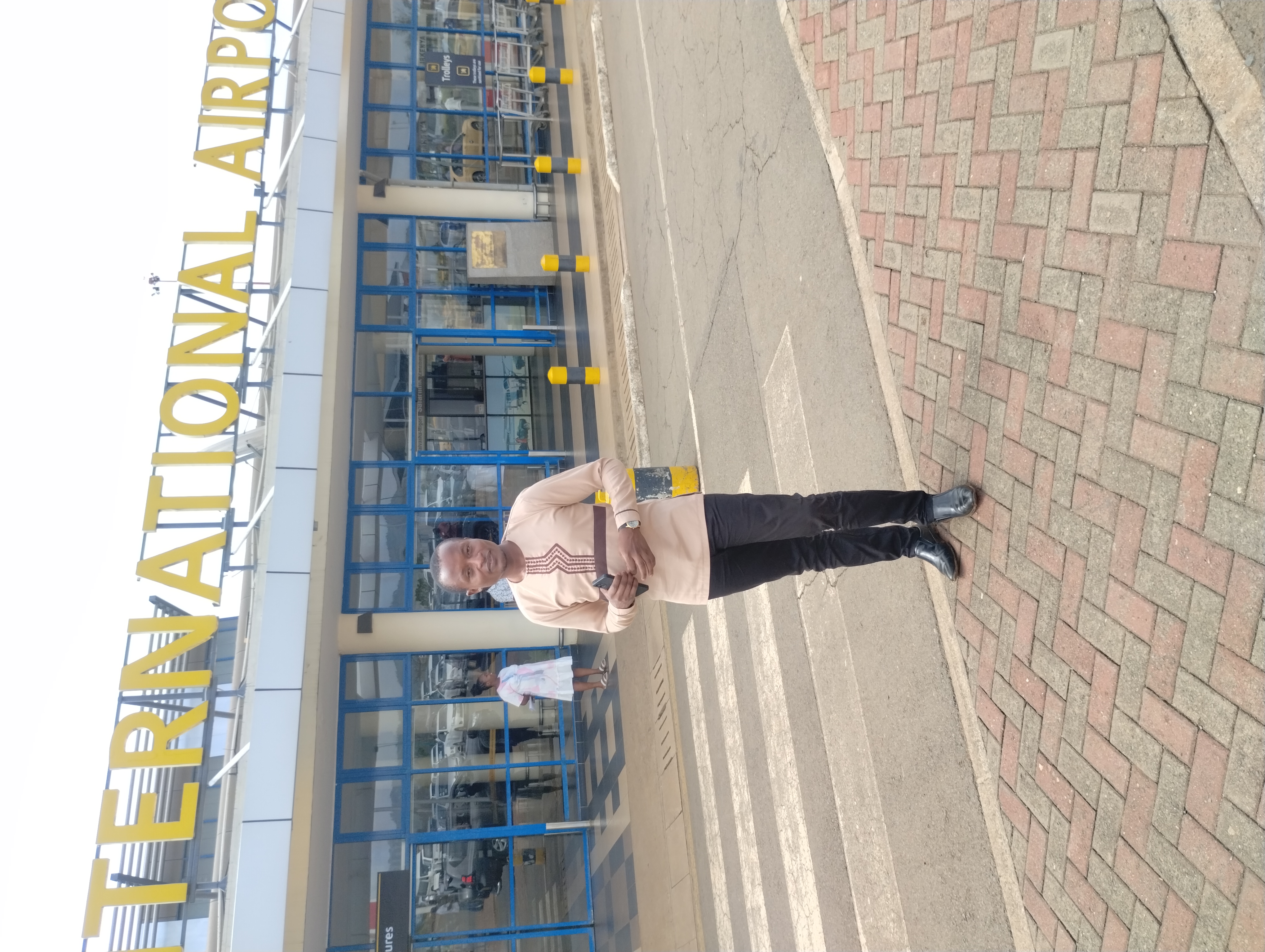


Bill Clinton Ooko travels between Kabondo, Kisumu, and other regions coordinating cooperative operations, building partnerships, and developing the digital infrastructure for both Baraka Agritech and LavernAI.